Yolandi Moses
The initial shock of a cancer diagnosis bordering on Stage 3 is paralysing. For 40-year-old Yolandi Moses, the immediate, human instinct was a desperate urge to hide away from the world. When the clinical reality of oncology wards sets in, fear becomes the default baseline.
Yet, navigating this landscape requires more than medical intervention; it demands a critical psychological pivot. In the growing archive of breast cancer survivor stories, survival is rarely just about the medicine – it is about the unyielding decision to retain authorship over one’s life.
The Mental Shift & Cancer Reality
Living with stage 2 breast cancer – especially when the pathology sits closer to Stage 3 – introduces an immense cognitive burden. Yolandi recognised early on that the intersection of mental health and breast cancer diagnosis is where the true battle is fought. She realised a harsh, empirical truth: many succumb to the disease simply because their mindset falters under the weight of the prognosis.
Instead of retreating, she made a calculated, uncompromising decision: her active lifestyle would not change. Her chemotherapy journey breast cancer treatment plan would simply be an addition to her daily routine, not a replacement for her life.
READ | Cape Town Mayor completes first Cycle Tour: ‘I loved it!’
The first session of treatment is notoriously brutal. The breast cancer chemotherapy side effects deliver a systemic shock that leaves the body severely depleted. In the gruelling aftermath of that initial cycle, it was not sheer willpower that forced Yolandi out of bed, but a mother’s instinct. Seeing her son’s confusion as she lay sick became the ultimate catalyst. She had taught him to fight and never give up; allowing him to witness her defeated was unacceptable.
This realisation also fueled her approach to coping with hair loss from chemotherapy. Instead of passively watching the physical toll take its course, she executed a preemptive strike to reclaim her autonomy by shaving her head. That single tactical manoeuvre transformed her fear of the public eye into a bold, dignified presence.
The Architecture Of Support
Endurance is rarely a solo endeavour. For Yolandi, the support infrastructure is anchored by her husband, whom she’s known for twenty years, Carlton. The reality of supporting a spouse through breast cancer requires a delicate balance of empathy and unwavering motivation. When the compounding exhaustion peaks, his directive is clear: “You can do it. You’ve achieved and conquered so much before, what’s stopping you from climbing this mountain?”
Finding how to stay positive during breast cancer treatment often relies heavily on these external pillars. This support network extended beyond her home. Reclaiming her space required stepping back into her local gym. Standing in line for the first time since shaving her head, her anticipated anxiety was dismantled when a trainer simply embraced her and said, “You got this.”
Endurance As Medicine
Active treatment protocols typically mandate extensive rest, but Yolandi’s data dictates a different approach. The clinical science behind working out during chemotherapy points to significant physiological and psychological benefits, provided the patient has a robust athletic baseline. Exercising with breast cancer fatigue is a complex metric to manage, but Yolandi successfully isolates the profound exhaustion to the first day or two after a session, retaining the energy to execute her daily life the rest of the time.
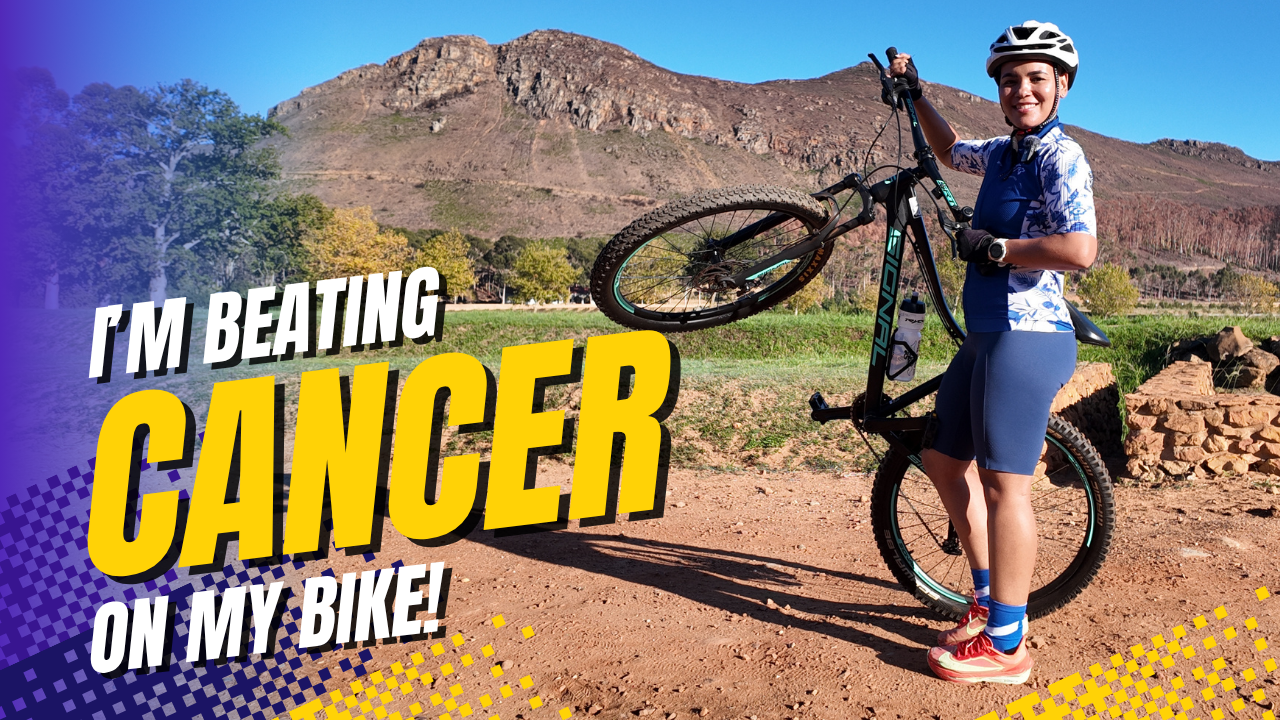
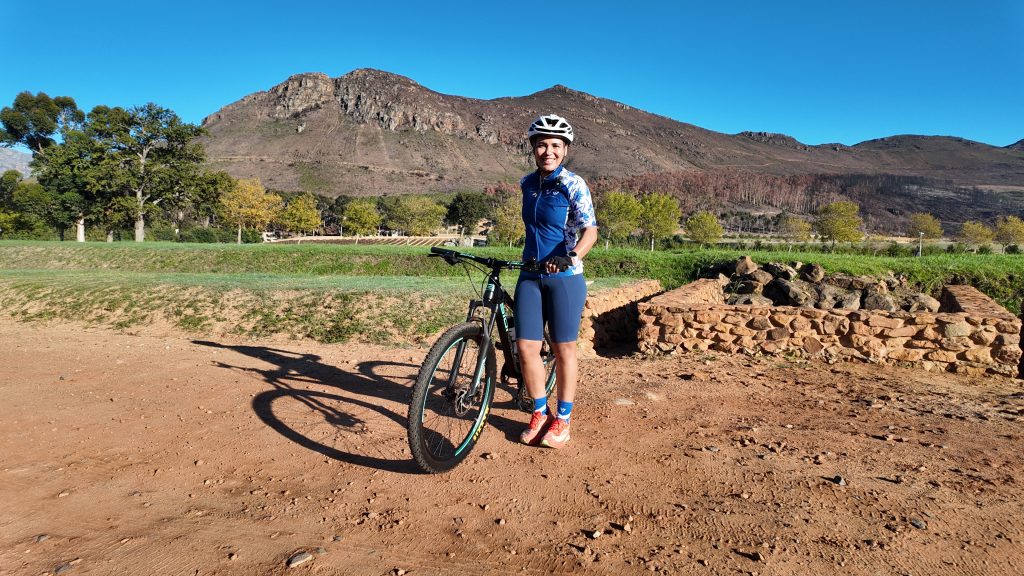
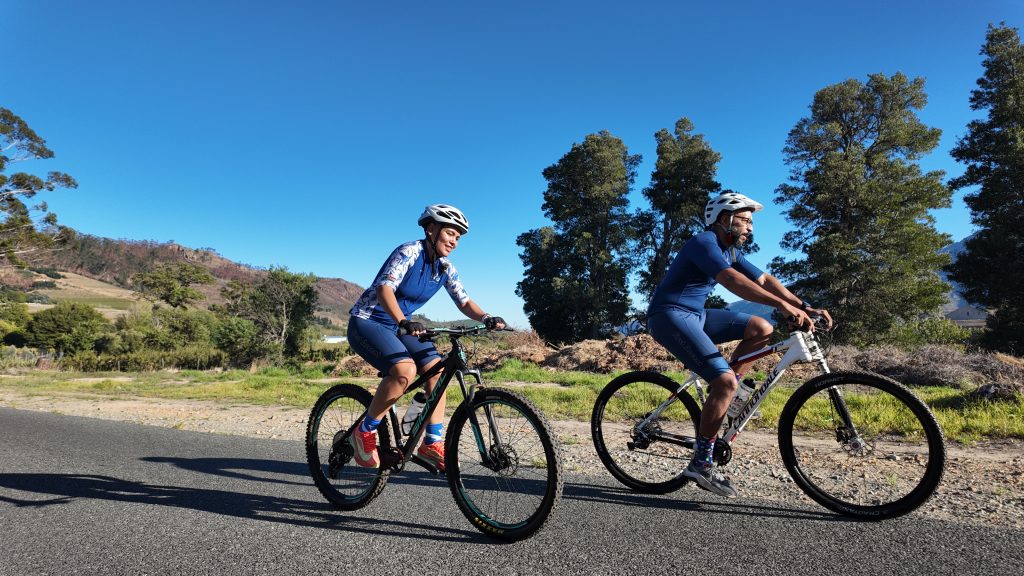
The strategy for staying active after breast cancer diagnosis involves both maintaining old disciplines and embracing new ones. The clinical, restrictive environment of a chemotherapy chair contrasts sharply with the open road. Breast cancer and mountain biking might seem like an unlikely combination, but cycling – spearheaded by Carlton in 2025 – has become a vital coping mechanism. It provides a new challenge and a fresh lease on life outside the hospital walls.
Defying The Cancer Prognosis On The Tarmac
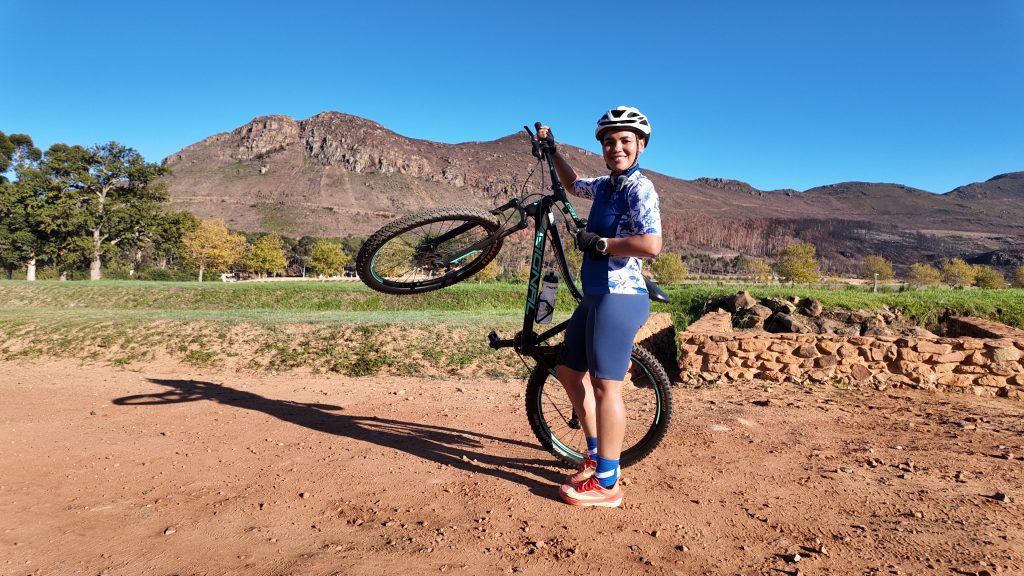
The true measure of her operational resilience is found in her 2026 athletic calendar. Cycling during chemotherapy is one feat, but executing major endurance events pushes the boundaries of human capability.
During the Cape Peninsula Marathon in February 2026, the internal urge to quit was loud. Yet, the brutal logistics of running a marathon while on chemotherapy were mitigated by her history as an ultra-marathoner; she knew she had to push through. Just a month later, she tackled her next milestone. When the route demanded more than her depleted body could offer, Carlton was beside her, proving his promise to tackle every life challenge together. Crossing the finish line in tears, she cemented her status as a Cape Town Cycle Tour cancer survivor.
Yolandi Moses is not just surviving a severe diagnosis; she is actively outriding it. And by refusing to unclip from her pedals and boldly owning her narrative, she proves that true endurance is in how you keep on keeping on despite what life throws at you.